
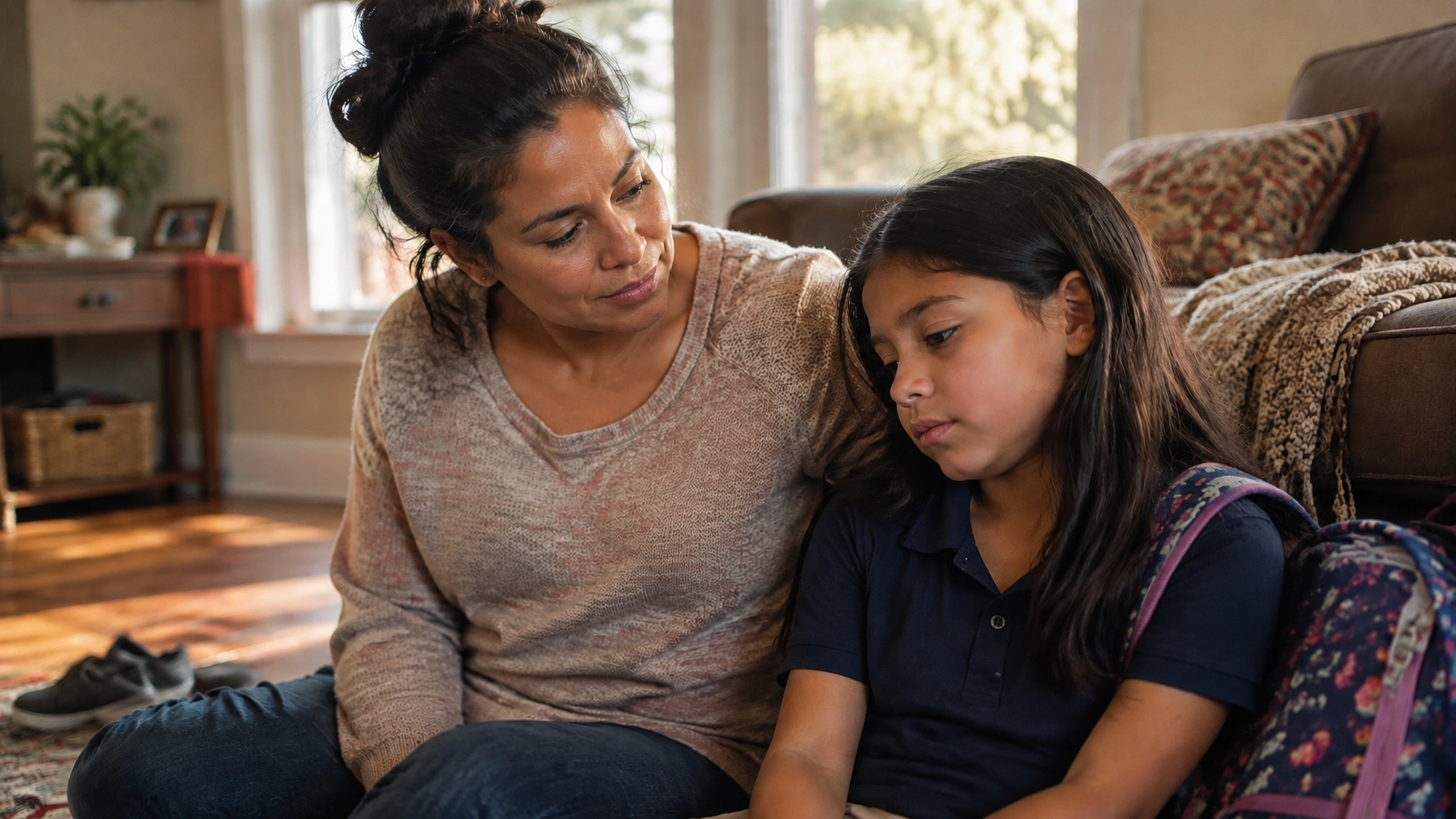
Restraint collapse is what happens when a child holds it together all day and then falls apart where they feel safest. If you are searching for a Hiram therapist after another hard pickup, this pattern can feel confusing. At school, your child seems quiet, compliant, even “such a good kid.” Then the car door shuts. The tears, yelling, or collapsing over the wrong cup begin.
What restraint collapse can look like
This has a name: restraint collapse. It does not mean your child is manipulating you, being “bad,” or that you are doing something wrong. Their body and brain have spent the day managing feelings and behavior. At home, where they feel safe, they may finally let go.
In plain words, the mask comes off at home because home is where it can come off. That is hard to hear when the behavior lands on you. But it does not mean you caused it. It may mean your child trusts you enough to show how worn out they feel.
Why restraint collapse happens after school
School asks a lot at once: noise, transitions, rules, sitting still, and holding feelings in. Some children work hard to manage sensory input, such as busy rooms or loud sounds. Others find social or emotional demands especially tiring. Often, several things add up.
A child who seems fine in class may still be using a lot of effort to stay “on.” By the time they get home, they may have little energy left for another question, task, or change of plan. Hunger, thirst, fatigue, and a packed schedule can make the after-school meltdown more likely.
How to ease big feelings after school
Try giving your child a quiet, low-demand landing for the first 20 to 30 minutes. Offer a snack and water before asking for a report on the day. Save homework, chores, and detailed questions until they have had time to settle.
Notice what helps your child reset. One may need to move, walk, or play outside. Another may want quiet or time alone nearby. Screens help some children unwind, but try not to make them the only outlet.
A predictable rhythm can make the transition easier: shoes off, snack and water, then downtime. Keep it flexible, but repeat the same steps when you can. During a calm moment, name the pattern: “School takes a lot out of you. Let’s figure out what helps when you get home.” That gives your child words for what is happening without shame.
Supporting your child through an after-school meltdown
When the outburst lands on you, it can hurt. You may feel rejected, exhausted, or worried that you are getting parenting wrong. You are not a bad parent because your child has big feelings with you. You may be the safest person in their world.
Your calm does not have to be perfect. Take a breath, lower your voice, and reduce demands where you can. Think of the adult’s calm as the room’s thermostat: it sets a steadier tone. If you feel overwhelmed, it is okay to pause and return when you can respond more calmly.
When an after-school meltdown needs more support
Consider professional support if the meltdowns happen daily and last for hours. The same goes for aggression, self-harm, or big struggles school also reports. Sensory patterns that make sounds, textures, or transitions especially hard are worth exploring too. Asking for help is not diagnosing your child; it is understanding what they need.
Get support for the after-school meltdowns
If the pattern keeps repeating, you do not have to figure it out alone. Child therapy at The Comfy Place is a warm, affirming space to understand what your child carries all day and what helps them land. We offer in-person services in Hiram, Macon, and Alpharetta, Georgia. Telehealth is available in Rhode Island, Florida, Massachusetts, Utah, South Carolina, Maine, Pennsylvania, New Hampshire, Connecticut, Vermont, Michigan, and New York.
Schedule your free 15-minute consultation today, and let’s talk about what support could look like for your child. If you or someone else is in emotional crisis, call or text 988.
Follow us on Instagram for more affirming resources and real talk.